
Why This Matters
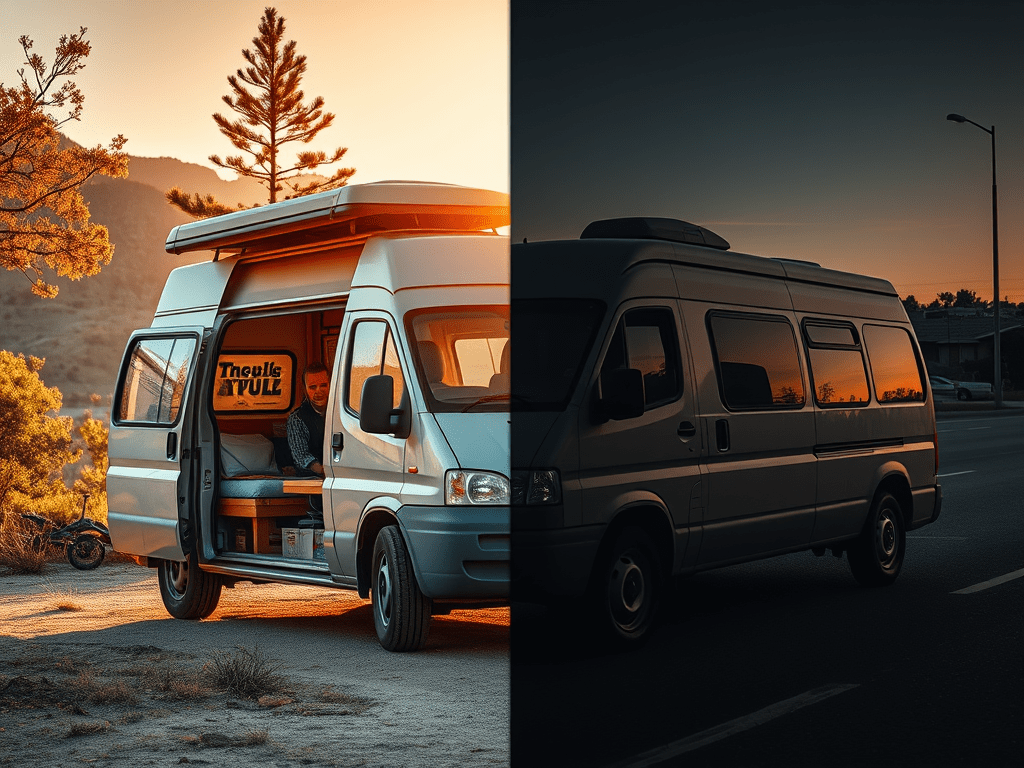
Van life is often celebrated as a symbol of freedom and simplicity, but for many people in the UK and beyond, living in a vehicle is less a choice and more a necessity shaped by the housing crisis, poverty, and systemic inequality. While voluntary van life can bring joy, adventure, and connection to nature, involuntary vehicle dwelling can be an experience of homelessness, insecurity, and stigma.
What assumptions do I bring to conversations about van life and homelessness? How might they obscure someone else’s experience?
Defining Terms & Distinctions
Voluntary van life is usually framed as lifestyle design, involving investments in converted vans, solar panels, and mobility freedom. In contrast, van life, where people sleep in laybys or car parks, overlaps closely with homelessness and reflects broader failures in affordable housing provision. Both experiences, however, share challenges such as finding safe places to park, maintaining hygiene, staying warm, and managing isolation.
Shared Challenges
- Lack of reliable access to sanitation and hygiene (showers, toilets, washing).
- Safety concerns (personal security, legal issues, being moved on by authorities).
- Social isolation or stigma.
- Overlooked mental health impacts, fatigue, and stress.
- Uncertainty: breakdowns, parking permissions, weather.
- Privilege, Choice, and Risk
While lifestyle van life is a choice, necessity van life is often not. The distinction often rests on:
- Economic cushion: having savings or a reliable income to buffer emergencies.
- Location & law: Some areas offer safe parking, others do not.
- Social support: networks of care reduce risk.
- Visibility & stigma: how authorities and the public respond can shape daily life.
Learning from Stories
Listening to lived experience helps nuance the conversation. For example:
- Van life is not an adventure when you’re homeless (Invisible People).
- “I was sleeping in laybys”: The people who spent the pandemic living in vans (The Guardian).
- I tried living the aspirational nomadic van life … and wound up homeless (Business Insider).
- Full-time van life is not cool – it’s homelessness and desperation (Green Builder Media).
Acting with Empathy & Inclusion
- Use respectful language: avoid romanticising suffering or shaming necessity.
- Acknowledge diversity of experience: lifestyle, necessity, or somewhere in between.
- Advocate for safe parking, accessible sanitation, and affordable housing.
- Challenge stereotypes in media portrayals.
- Extend solidarity: offer practical and emotional support.
Final Thought
Van life, when it’s a choice, can be liberating. But when people find themselves living in vehicles because they have no other housing options, it borders on or becomes homelessness. Recognising this isn’t to diminish van life, but to expand the conversation: to include care, fairness, and compassion. Every story matters. Every person deserves dignity.
Explore more with us:
- Browse Spiralmore collections
- Read our Informal Blog for relaxed insights
- Discover Deconvolution and see what’s happening
- Visit Gwenin for a curated selection of frameworks
 The Sustainable Stop