
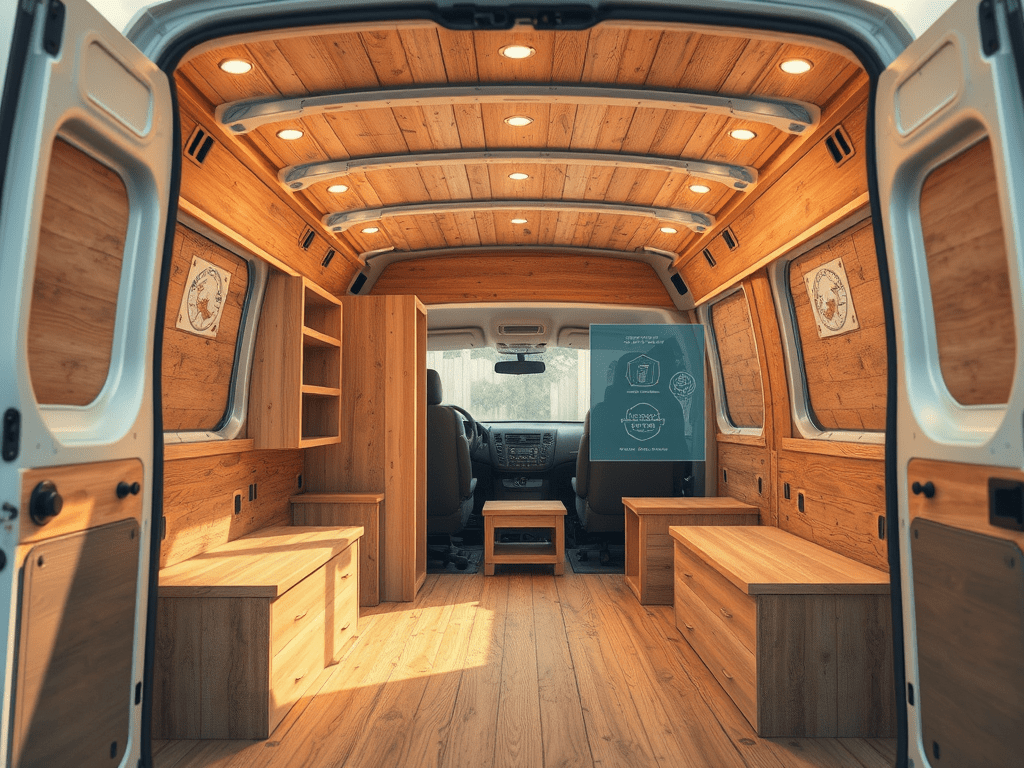
Your van might feel cosy, but beneath the wood panels, insulation, and flooring lies a world of material science that affects sustainability, air quality, and long-term health.
This guide dives into the chemistry of common van conversion materials, what they emit, how they break down, and how to choose options that are healthier for both you and the planet.
The Materials Science You Don’t See (But Definitely Breathe)
1. VOCs (Volatile Organic Compounds)
Plywood, adhesives, varnishes, and paints often release VOCs that off-gas into your living space. Exposure can cause headaches, allergies, and long-term respiratory issues.
2. Microplastics from Synthetic Textiles
Cushions, curtains, carpets, and insulation made from polyester release microfibres through daily wear. These fibres accumulate in dust and enter natural environments when ventilated or cleaned.
3. Insulation & Thermal Efficiency
Materials like PIR boards, fibreglass, and recycled wool all work differently:
- Fibreglass: effective but sheds irritant particles
- PIR/PUR foam boards: high insulation value but energy-intensive to produce
- Sheep wool/cork: natural, breathable, renewable, and low-VOC
4. Plastics & UV Degradation
Plastics used in vents, trims, and storage boxes slowly degrade with UV exposure, releasing microplastics and weakening over time.
Sustainable Alternatives That Hold Up on the Road
Reclaimed Timber
Low environmental footprint, naturally aesthetic, and far fewer VOCs.
Natural Insulation Materials
Cork, sheep wool, recycled denim, or hemp-lime blends offer excellent insulation with minimal environmental impact.
Low-VOC Adhesives & Finishes
Look for water-based varnishes, solvent-free adhesives, and EU-certified low-emission products.
Recycled Plastics & Metals
High-quality recycled aluminium or HDPE components reduce embodied carbon and offer excellent durability.
Build for Longevity, Not Landfill
Choosing durable materials reduces future waste. A well-built van using sustainable components often lasts longer, requires fewer repairs, and produces fewer emissions over its lifetime.
Final Thoughts
The materials you choose shape more than just your aesthetic; they shape your environmental footprint and everyday wellbeing. With mindful selection backed by material science, your van can be both beautiful and responsibly built.
Explore more with us:
- Browse Spiralmore collections
- Read our Informal Blog for relaxed insights
- Discover Deconvolution and see what’s happening
- Visit Gwenin for a curated selection of frameworks
 The Sustainable Stop