
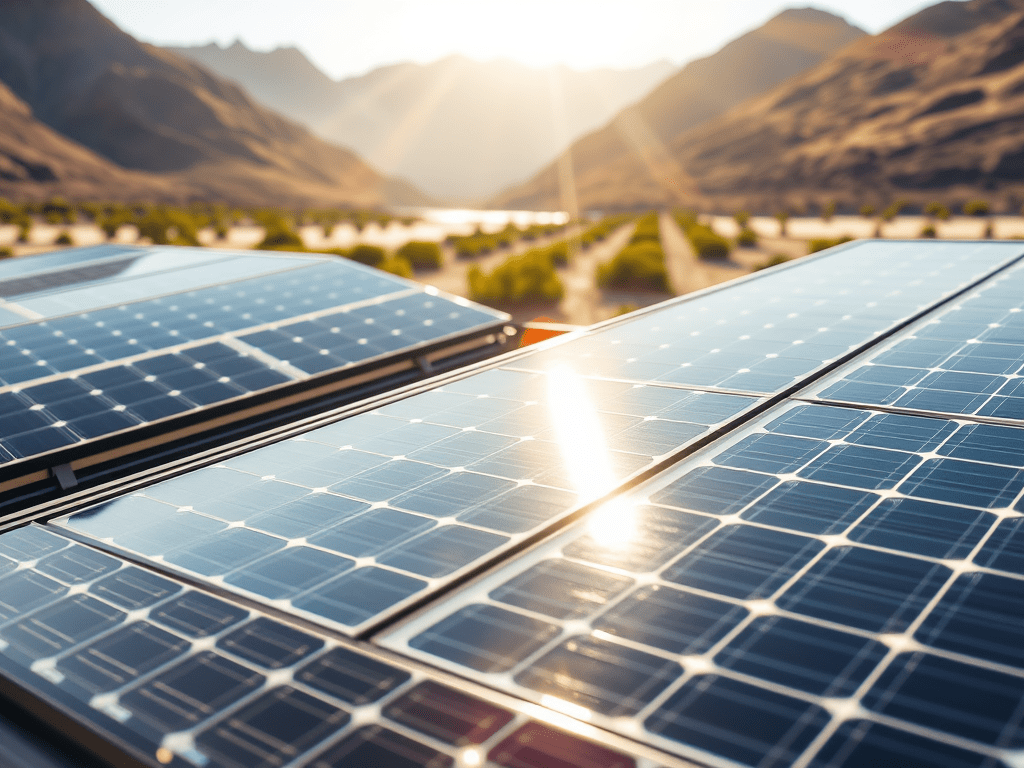
Solar power isn’t just a popular vanlife trend; it’s a triumph of physics, engineering, and sustainability. Understanding how solar panels work helps you size your system properly, maximise energy on cloudy days, and reduce your reliance on fossil fuels.
How Solar Panels Actually Work (Simple but Scientific)
Solar panels generate electricity through photovoltaic (PV) cells, typically made from silicon. When sunlight hits these cells:
- Photons knock electrons loose.
- Electrons flow through a circuit.
- The system produces direct current (DC) electricity.
This elegant process produces clean energy with no emissions, no noise, and no moving parts.
Solar Efficiency: More Than Just Sunshine
Efficiency depends on:
- Cell type (monocrystalline performs best for vanlife)
- Temperature (panels are more efficient when cool)
- Angle and orientation
- Dust, pollen, or shade
Even small shadows like roof racks or vents can significantly reduce output.
The Carbon Payback of Solar
Solar panels require energy to produce, but most repay their carbon footprint within 1–3 years. Over a typical 25-year lifespan, they offset many times their embodied emissions.
For vanlifers, that means:
- Less reliance on idling or generators
- More silent, guilt-free nights off-grid
- A dramatically lower travel footprint
Battery & Storage Considerations
Pairing solar with a high-quality battery (lithium recommended) allows you to store excess power for evenings or low-sun days.
Consider:
- Daily power consumption
- Number of cloudy days when you travel
- Whether you’ll pair solar with alternator charging
Final Thoughts
Solar isn’t just a convenience; it’s a cornerstone of sustainable vanlife. With the right setup, you can power your travels cleanly, quietly, and independently.
“Exciting news: Spiralmore, the cross-disciplinary project hub, is evolving! A new version is coming soon to help you combine accessibility with sustainability, science, and reflective learning. Stay tuned for updates.”
 The Sustainable Stop