
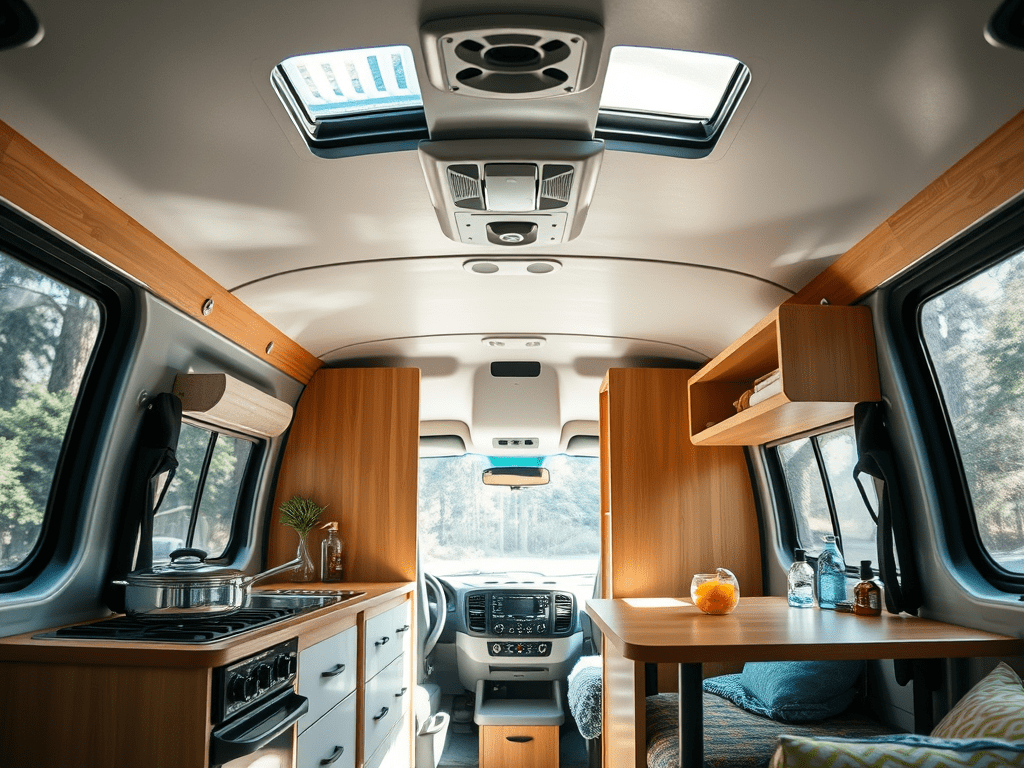
Air quality inside small spaces matters, and a campervan is about as small as it gets. From cooking fumes to off-gassing materials, the air inside your van can be more polluted than the air outside.
This post explores the chemistry of indoor air quality, common pollutants, and science-backed strategies to keep your mobile home healthy.
Common Indoor Air Pollutants in Vans
1. VOCs
Emitted from paints, varnishes, adhesives, cleaning products, and new furnishings.
2. Particulates (PM2.5 & PM10)
Produced by cooking, diesel heaters, dust, and outdoor pollution entering through vents.
3. Carbon Monoxide (CO)
A dangerous, odourless gas from incomplete combustion, especially from heaters, fridges, or camping stoves used indoors.
4. Humidity & Mould Spores
Moisture from breathing, cooking, and wet gear increases mould risk, affecting respiratory health.
Ventilation: The Most Important Factor
Scientific studies show that good ventilation drastically improves air quality. For vans, this means:
- Roof vents (passive or powered)
- Crack-open windows
- Cross-breeze during cooking
- Never running stoves without airflow
Filters and Purifiers
Portable HEPA filters can reduce particulates and allergens, while activated-carbon inserts help neutralise odours and VOCs.
Reduce Pollution at the Source
- Cook outside when possible
- Use low-VOC products
- Avoid burning candles or incense
- Maintain heaters and fuel systems
Final Thoughts
Clean air keeps you healthier, more energised, and more comfortable on the road. With the right science-driven strategies, your van can feel fresh no matter the weather or season.
Explore more with us:
- Browse Spiralmore collections
- Read our Informal Blog for relaxed insights
- Discover Deconvolution and see what’s happening
- Visit Gwenin for a curated selection of frameworks
Relentless. Results-driven. Remote-ready.
I manage multiple live websites, numerous publications, and patents – delivering research, strategy, and commercialisation expertise.
 The Sustainable Stop