
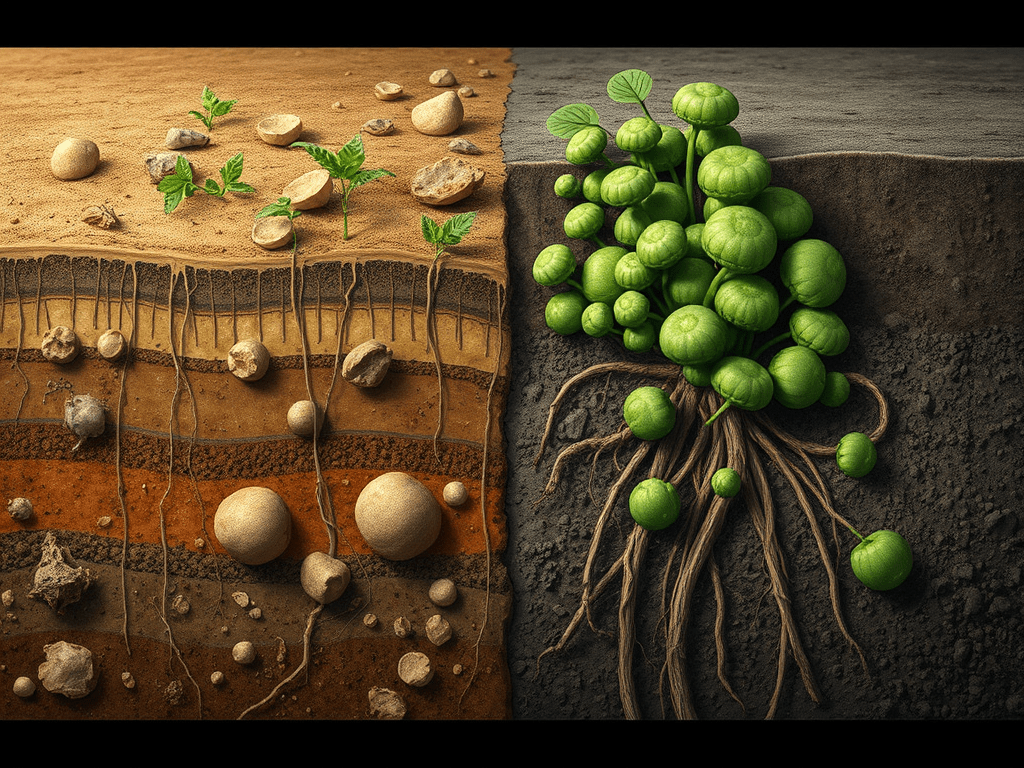
That picture-perfect pull-in spot might look untouched, but the ecosystem beneath your tyres is fragile. Soil isn’t just dirt; it’s a living system full of microbes, fungi, nutrients, and intricate structure.
This post reveals how parking choices impact ecosystems and how a little soil science can help you tread more lightly.
Soil: A Living, Breathing Ecosystem
Healthy soil contains:
- Microorganisms
- Organic matter
- Pore spaces for air and water
- Fungi and root systems
These components work together to support plants, regulate water, and store carbon.
How Vehicles Affect Soil
1. Compaction
The weight of a van compresses soil, reducing pore space. Compacted soil holds less water and oxygen, stressing plants and microbes.
2. Erosion
Disturbed or compacted soil is more vulnerable to erosion by wind and rain, leading to washouts and vegetation loss.
3. Chemical Contamination
Leaking greywater, detergents, or fluids can alter soil pH and harm microbes.
4. Damage to Vegetation
Parking on grass or moss destroys fragile roots that may take years to regrow in slow-recovering ecosystems.
Parking Responsibly: Science-Based Tips
- Use designated camping areas wherever possible
- Avoid meadows, marshes, dunes, and forest undergrowth
- Never park on peat or moss
- Choose gravel, rock, or hardened ground
- Keep greywater contained
- Don’t create new tracks or ruts
Final Thoughts
Understanding soil science helps us see the hidden impact of our parking choices. By choosing responsible spots, we protect ecosystems and preserve wild spaces for everyone to enjoy.
Explore more with us:
- Browse Spiralmore collections
- Read our Informal Blog for relaxed insights
- Discover Deconvolution and see what’s happening
- Visit Gwenin for a curated selection of frameworks
Relentless. Results-driven. Remote-ready.
I manage multiple live websites, numerous publications, and patents – delivering research, strategy, and commercialisation expertise.
 The Sustainable Stop