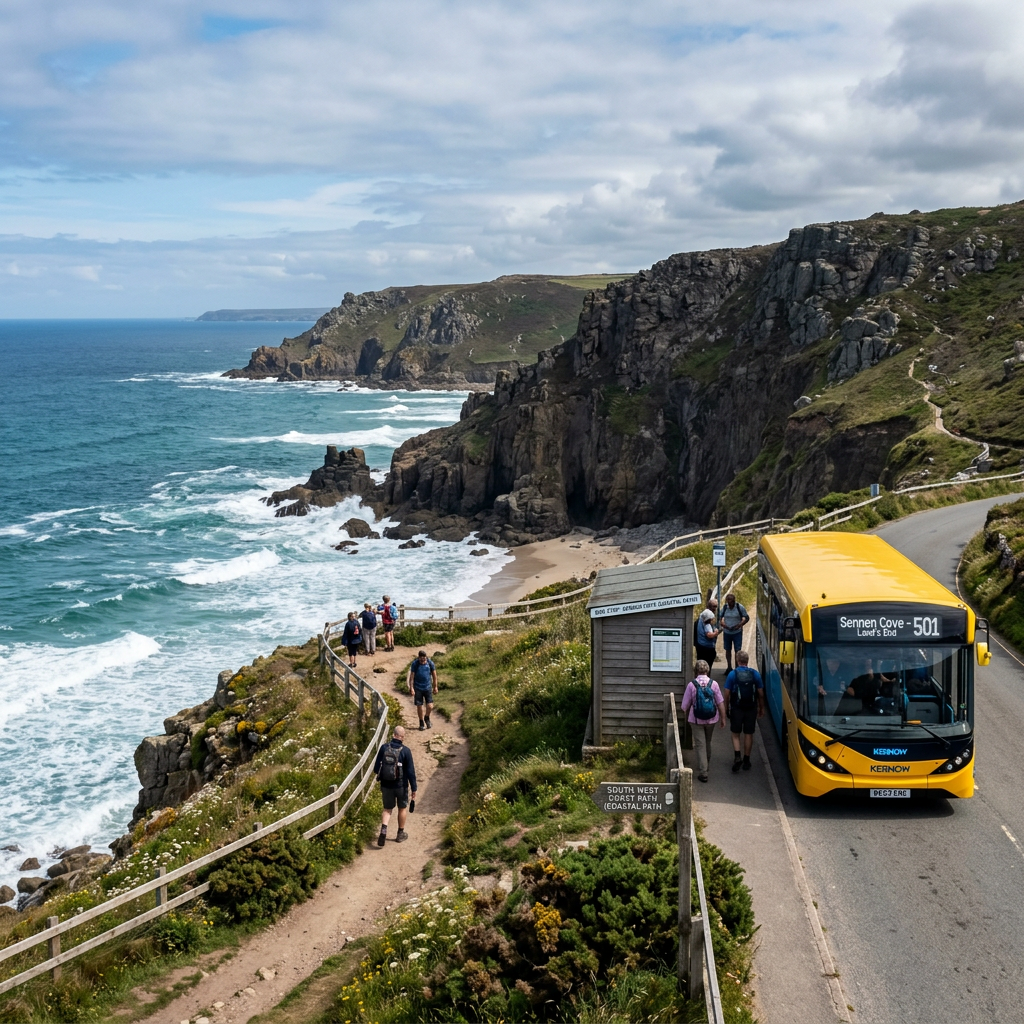
Travelling the UK without a car is not only possible, but it is also one of the most effective ways to explore the country more sustainably.
The UK has:
- A dense rail network connecting most major regions
- Extensive coach services for long-distance travel
- Strong local bus networks in cities and towns
- Highly walkable urban centres
This guide shows you how to actually travel the UK car-free, with real routes, planning tools, and destination examples.
1. Core UK Car-Free Transport System
Before planning routes, it helps to understand the three key layers of UK transport.
Rail (Main long-distance network)
Trains are the backbone of UK car-free travel.
Useful links:
- National Rail planner: https://www.nationalrail.co.uk
- Trainline (route comparison): https://www.thetrainline.com
Why rail matters:
- Connects cities and regions quickly
- Avoids motorway dependency
- Links directly to many walking routes and parks
Coaches (Budget long-distance option)
Coaches fill gaps where rail is expensive or limited.
- National Express: https://www.nationalexpress.com
- Megabus: https://uk.megabus.com
Best use:
- Long-distance city-to-city travel
- Low-cost alternatives to trains
Local Transport (Final mile connection)
Once you arrive, you switch to:
- Buses
- Walking
- Cycling
- Taxis if needed
2. Example 1: London → Peak District (Classic Rail + Trail Route)
This is one of the best examples of UK car-free travel.
Step 1: Train to the Peak District gateway
From London, travel to:
- Buxton railway station
- Matlock railway station
Use:
https://www.nationalrail.co.uk
Step 2: Walk accessible trails
Once there, you can access:
- Monsal Trail
- Tissington Trail
- High Peak Trail
These are former railway lines, meaning:
- Flat gradients
- Wide paths
- Minimal traffic
Why this works:
- No car required at any stage
- Stations connect directly to trail systems
- Easy return journeys
3. Example 2: Manchester → Lake District (Train + Bus Model)
Step 1: Train to Windermere / Oxenholme
From Manchester:
- Direct rail routes available via National Rail
https://www.nationalrail.co.uk
Step 2: Local bus connections
From stations, use:
- Stagecoach Cumbria: https://www.stagecoachbus.com
Step 3: Accessible nature routes
Once inside the Lake District:
- Lake District National Park
- lakeside walking paths (Derwentwater, Windermere areas)
Many lakeside routes are flat and walkable without a car.
4. Example 3: London → Cornwall (Rail + Bus Coastal Travel)
Cornwall is often seen as car-dependent, but it is still possible without a vehicle.
Step 1: Train to Cornwall
Key stations:
- Bodmin Parkway railway station
- Penzance railway station
Plan:
https://www.nationalrail.co.uk
Step 2: Bus connections
Cornwall has a strong coastal bus network:
- Transport for Cornwall: https://www.transportforcornwall.co.uk
Step 3: Walkable routes
- Camel Trail
- Penzance promenade
- Marazion coastal walk
5. Example 4: Edinburgh → Highlands (Rail-Based Scenic Travel)
Step 1: Train from Edinburgh
From Edinburgh:
- ScotRail services northwards
https://www.scotrail.co.uk
Step 2: Highland access points
- Fort William
- Aviemore
- Inverness
Step 3: Local exploration
- Forest trails
- Loch-side paths
- Managed walking routes
Many areas are accessible without driving if you stay central.
6. Example 5: City Break Without Cars (London Model)
London is the easiest UK city for car-free travel.
Transport system:
- Tube (TfL): https://tfl.gov.uk
- Buses (24/7 network)
- Walking routes across central zones
Accessible green spaces:
- Hyde Park
- Regent’s Park
- Thames Path sections
7. Planning Your Car-Free UK Trip
Key planning steps:
Choose the rail hub first
Pick:
- London
- Manchester
- Birmingham
- Edinburgh
Add local transport second
- Buses
- Walking routes
- Short taxi hops if needed
Choose destinations that match transport reality
Best car-free destinations:
- Peak District (rail trails)
- Lake District (lakeside zones)
- Cornwall (coastal towns)
- London (fully urban network)
8. Common Mistakes in Car-Free Travel
❌ Mistake 1: choosing remote villages first
→ Often no direct transport links
❌ Mistake 2: ignoring last-mile travel
→ Stations ≠ final destination
❌ Mistake 3: overpacking itinerary
→ UK transport delays are real
9. Core Principle of Car-Free Travel
Car-free travel works best when you:
Build your trip around transport, not destinations
Final Takeaway
Travelling the UK without a car is not a limitation; it is a different way of planning journeys.
With rail hubs, bus networks, and walkable destinations, you can reach:
- National parks
- Coastal routes
- Major cities
- Rural trails
…all without needing to drive.