
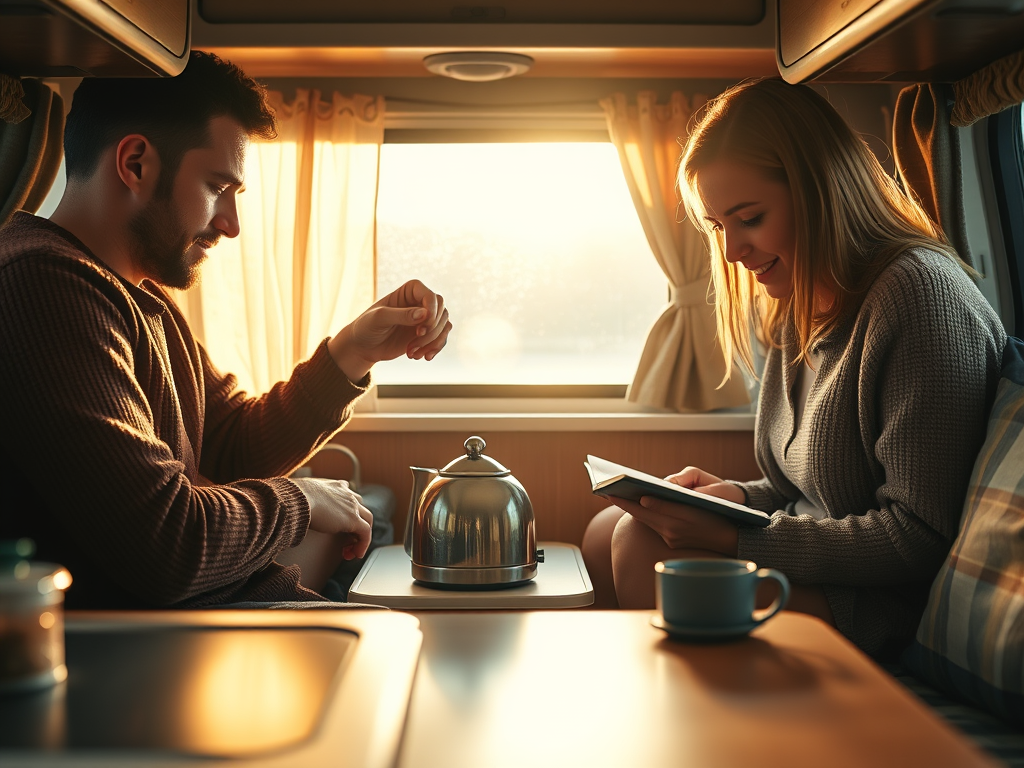
A reflection on power, pacing, and the ceremonial chaos of morning tea in a campervan.
In the delicate ecosystem of campervan life, few objects wield as much emotional influence as the kettle. It’s not just a tool, it’s a symbol. Of rhythm. Of ritual. Of relational power dynamics that emerge before anyone’s brushed their teeth or located the milk.
Morning begins. One person stirs, bleary-eyed, reaching for the kettle like it’s a sacred relic. The other is already halfway through a grief journal, seated strategically between the kettle and the gas hob. A silent standoff ensues. No one speaks. The kettle sits in the middle, radiating tension and potential.
Who gets to boil first?
This is not a question of logistics. It’s a question of emotional sequencing. Who needs warmth most urgently? Whose closest to collapse? Who has the ceremonial right to initiate the day’s rhythm?
In campervan culture, the kettle is often the first boundary test. It reveals who’s attuned to pacing, who’s still emotionally buffering, and who’s about to cry because the water filter is missing. It’s a relational dance, part choreography, part chaos.
And then there’s the etiquette. Do you ask, “Do you mind if I boil?” or do you simply gesture toward the kettle like a weary oracle? Do you offer to make tea for both, or do you protect your ritual like a sacred solo? Do you apologise for needing warmth, or do you claim it with quiet dignity?
The kettle, in this context, becomes a mirror. Of how we share space. Of how we honour need. Of how we navigate the absurd intimacy of confined living.
So next time you find yourself in a campervan, staring down a kettle and a companion with equal intensity, remember this is not just about tea. It’s about emotional architecture. And the kettle, dear traveller, is the cornerstone.