
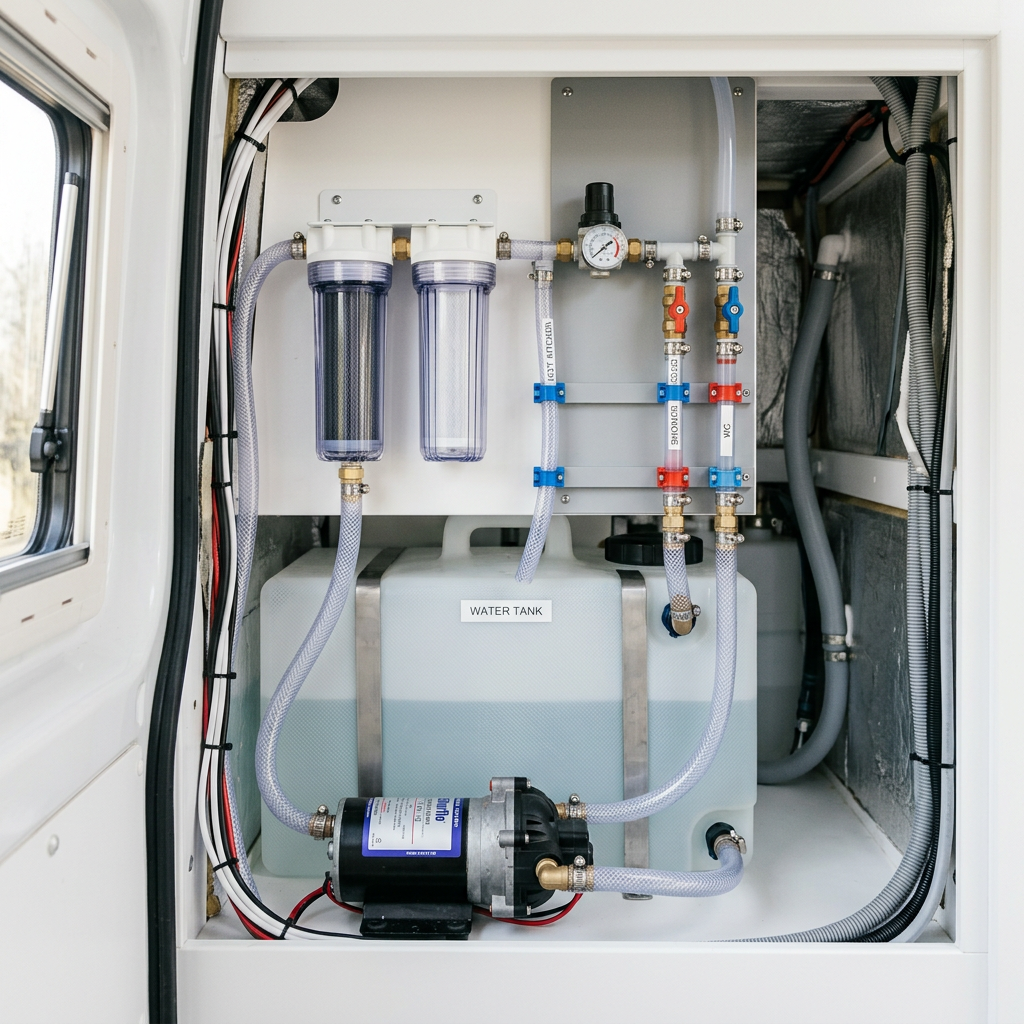
A reliable water system is essential for comfortable campervan travel. Whether you’re using your van for weekend escapes, extended tours or full-time travel, regular maintenance helps ensure your water remains safe, your equipment operates efficiently and expensive repairs are avoided.
Many water system problems develop gradually. Minor leaks, contaminated tanks and worn components often go unnoticed until they become inconvenient or costly.
This guide provides a practical maintenance schedule covering routine inspections, seasonal servicing and preventative maintenance for campervan water systems.
For a broader overview of water planning and usage, see Fresh Water Management for Long Trips.
Why Water System Maintenance Matters
Regular maintenance helps:
- Maintain safe drinking water
- Prevent bacterial growth
- Extend equipment lifespan
- Reduce repair costs
- Improve system reliability
- Prevent leaks and water damage
A well-maintained system is particularly important during extended off-grid travel, where repair facilities may not be easily accessible.
Monthly Water System Checklist
These quick checks help identify developing issues before they become significant problems.
Inspect the Fresh Water Tank
Check for:
- Cracks
- Damage
- Unusual odours
- Discolouration
- Signs of contamination
Any unusual smells or tastes should be investigated immediately.
Check Water Pump Operation
Listen for:
- Excessive cycling
- Unusual noises
- Reduced pressure
- Inconsistent flow
A pump that cycles frequently without water being used may indicate a leak somewhere in the system.
Inspect Pipework and Connections
Look for:
- Loose fittings
- Damp areas
- Corrosion
- Abrasion damage
- Signs of leaks
Even small leaks can waste significant amounts of water over time.
Check Water Filters
Inspect:
- Sediment build-up
- Reduced flow rates
- Discolouration
Replace filters according to manufacturer recommendations.
Clean water helps protect pumps, taps and appliances.
Test All Taps and Fixtures
Ensure:
- Smooth operation
- Consistent pressure
- No dripping
- Proper shut-off
Small drips often indicate worn seals that can be replaced before larger issues develop.
Quarterly Maintenance Checklist
Every three months, perform a more detailed inspection.
Sanitise the Fresh Water System
Water systems should be sanitised regularly to maintain water quality.
This process typically involves:
- Emptying the tank
- Filling with a suitable sanitising solution
- Running water through all outlets
- Allowing appropriate contact time
- Flushing thoroughly
Always follow product instructions carefully.
Regular sanitisation helps prevent bacterial growth and unpleasant tastes.
Clean Tank Fillers and Caps
Filler points are common contamination sources.
Inspect and clean:
- Filler necks
- Caps
- Seals
- External fittings
Replace damaged seals promptly.
Inspect Water Tank Mountings
Check:
- Mounting straps
- Brackets
- Fasteners
- Protective coverings
Road vibration can loosen fittings over time.
Secure mounting protects both the tank and the surrounding vehicle structure.
Examine Ventilation Lines
Blocked vents can cause:
- Slow filling
- Pressure issues
- Tank deformation
Ensure vent lines remain clear and unobstructed.
Biannual Maintenance Checklist
Twice per year, conduct a comprehensive inspection.
Inspect Water Heater Systems
If fitted, check:
- Connections
- Safety valves
- Ventilation
- Performance
Water heaters often operate under higher pressures and temperatures than the rest of the system.
Any signs of leakage should be addressed immediately.
Inspect Grey Water Components
Check:
- Grey tank condition
- Drain valves
- Hoses
- Seals
Proper grey water management forms part of responsible campervan travel.
For environmental guidance, see our Responsible Wild Camping Code.
Test System Pressure
Pressure testing can reveal:
- Hidden leaks
- Failing fittings
- Weak joints
Identifying issues early often prevents larger repairs later.
Review Water Consumption Trends
If usage has increased unexpectedly, investigate possible causes.
Common explanations include:
- Hidden leaks
- Dripping taps
- Pump inefficiencies
This also provides a useful opportunity to review your overall water management strategy.
For refill planning advice, see Guide to Low-Cost Refill Points Across the UK.
Annual Maintenance Checklist
Once per year, perform a full service inspection.
Deep Clean the Entire System
Annual servicing should include:
- Tank cleaning
- Pipe flushing
- Pump inspection
- Filter replacement
- Water heater checks
This provides a clean starting point for the year ahead.
Replace Worn Components
Inspect and replace as required:
- Seals
- O-rings
- Flexible hoses
- Filters
- Clips and fittings
Preventative replacement is often cheaper than emergency repairs.
Inspect Winter Protection Measures
Check:
- Pipe insulation
- Tank insulation
- Frost protection systems
Winter-related damage remains one of the most common causes of water system failures.
Review Emergency Equipment
Carry:
- Spare hose connectors
- Repair tape
- Spare seals
- Basic tools
- Backup water containers
Minor repairs become much easier when suitable supplies are available.
Winter Maintenance Considerations
Cold weather creates additional challenges.
Potential issues include:
- Frozen tanks
- Frozen pipework
- Cracked fittings
- Damaged pumps
Before freezing conditions:
- Drain unused systems where appropriate
- Insulate vulnerable components
- Monitor weather forecasts
- Keep emergency water reserves available
For broader seasonal preparation advice, see our upcoming Cold Weather Vanlife Guide.
Signs Your Water System Needs Attention
Investigate immediately if you notice:
Unpleasant Water Taste
May indicate contamination or overdue sanitisation.
Reduced Water Pressure
Could suggest blockages, leaks or pump issues.
Frequent Pump Cycling
Often a sign of leaks or pressure loss.
Damp Areas
May indicate hidden leaks.
Unusual Noises
Pumps and water heaters often provide early warning signs of developing problems.
Common Maintenance Mistakes
Ignoring Small Leaks
Minor leaks rarely fix themselves.
Delaying Sanitisation
Water quality can deteriorate surprisingly quickly.
Forgetting Winter Preparation
Frozen systems can cause extensive damage.
Overlooking Filters
Blocked filters reduce efficiency and strain equipment.
Waiting for Problems to Appear
Preventative maintenance is always easier than emergency repairs.
Water System Maintenance Schedule
Every Month
- Check tank condition
- Inspect pump operation
- Test taps
- Look for leaks
- Inspect filters
Every 3 Months
- Sanitise system
- Clean filler points
- Inspect mountings
- Check vents
Every 6 Months
- Inspect the grey water system
- Check the water heater
- Test system pressure
Every Year
- Full deep clean
- Replace worn components
- Review winter protection
- Inspect emergency equipment
Maintenance Checklist Before Long Trips
Before extended travel:
- Fresh water tank cleaned
- Filters inspected
- Pump tested
- Pipework checked
- Spare parts packed
- Backup water storage is prepared
- Water quality confirmed
Completing these checks before departure significantly reduces the likelihood of problems while travelling.
Final Thoughts
A campervan water system is easy to take for granted until something goes wrong.
Regular inspections, routine sanitisation and preventative maintenance help ensure reliable access to safe water wherever your travels take you.
By following a simple maintenance schedule throughout the year, you can extend the life of your equipment, reduce repair costs and enjoy greater confidence when travelling off-grid.
Good maintenance supports every aspect of successful campervan travel, from responsible water use to extended adventures in remote locations.