
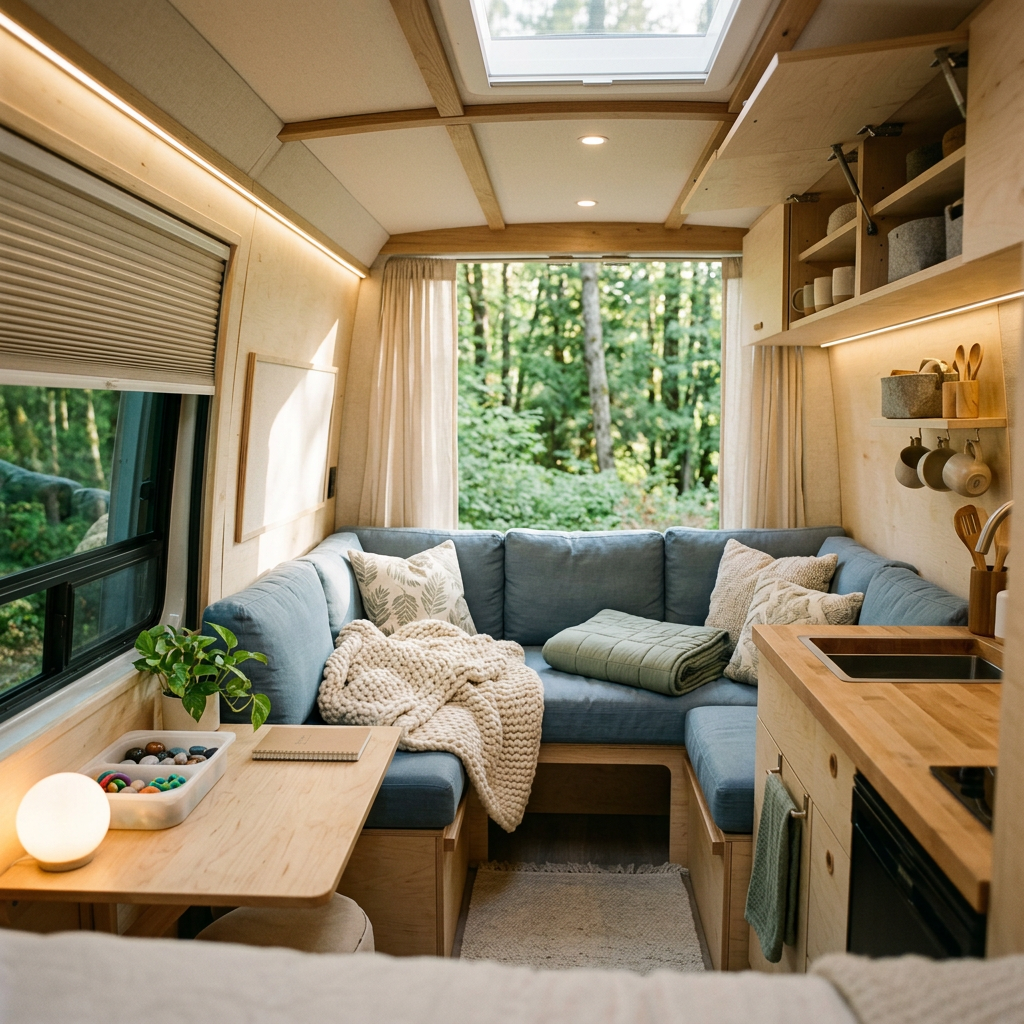
The campervan lifestyle offers freedom, flexibility and the opportunity to explore at your own pace.
For travellers with sensory sensitivities, however, the travel environment can significantly influence comfort, wellbeing and enjoyment.
Noise, lighting, crowds, weather conditions and changes in routine can all affect how comfortable a journey feels.
Fortunately, one of the greatest advantages of campervan travel is the ability to shape your surroundings to suit your individual needs.
With thoughtful planning and practical adjustments, many travellers can create a sensory-friendly environment that supports confidence, relaxation and sustainable travel.
This guide explores how to make campervan living and travel more sensory-friendly.
For a broader overview, see Accessibility & Inclusive Campervan Travel Guide (2026 Edition) and Hidden Disabilities & Campervan Travel (2026 Edition).
What Does Sensory-Friendly Mean?
A sensory-friendly environment aims to reduce unnecessary sensory stress and provide a more comfortable experience.
Sensory considerations may involve:
- Noise
- Lighting
- Smells
- Temperature
- Crowds
- Visual stimulation
- Physical surroundings
Every person experiences sensory input differently.
What feels calming to one traveller may feel overwhelming to another.
Who May Benefit from Sensory-Friendly Travel?
Sensory-friendly travel can benefit many people, including:
- Autistic travellers
- People with sensory processing differences
- Travellers with anxiety
- Individuals with chronic fatigue conditions
- People with neurological conditions
- Anyone who prefers calmer environments
Sensory comfort is not limited to any single group.
Why Campervan Travel Can Be Sensory-Friendly
Compared to many traditional holidays, campervan travel often offers greater control over the environment.
Benefits may include:
Familiar Surroundings
Flexible Scheduling
Personal Space
Reduced Crowding
Control Over Daily Activities
This flexibility allows travellers to create an environment that works for them.
Understanding Your Personal Sensory Needs
Before planning a trip, it can be helpful to identify what affects your comfort.
Potential considerations include:
Noise Sensitivity
Light Sensitivity
Temperature Preferences
Crowded Environments
Unpredictable Situations
Strong Smells
Understanding personal triggers can help guide travel decisions.
Noise Management in a Campervan
Noise is one of the most common sensory challenges while travelling.
Potential sources include:
Traffic
Campsite Activity
Wind
Rain
Generators
Nearby Events
Reducing unwanted noise can improve comfort significantly.
Choosing Quieter Campsites
Not all campsites provide the same atmosphere.
Many sensory-sensitive travellers prefer:
Smaller Campsites
Rural Locations
Adult-Only Sites
Low-Traffic Areas
Off-Peak Travel Periods
Researching campsites beforehand can help avoid surprises.
Managing Internal Noise
Noise inside the campervan can also affect comfort.
Examples include:
Appliances
Fans
Heating Systems
Refrigerators
Loose Equipment
Regular maintenance and organisation can help minimise unnecessary noise.
Lighting Considerations
Lighting can strongly influence comfort and relaxation.
Factors to consider may include:
Brightness Levels
Adjustable Lighting
Screen Use
Evening Lighting Routines
Natural Light Exposure
Creating a comfortable lighting environment can support wellbeing.
Creating a Calm Living Space
Many travellers benefit from a campervan environment that feels organised and predictable.
Helpful strategies may include:
Decluttering
Consistent Storage Locations
Familiar Items
Simple Layouts
Comfortable Furnishings
A calm environment often feels easier to manage.
Managing Visual Stimulation
Busy environments can sometimes feel overwhelming.
Potential considerations include:
Campsite Layouts
Traffic Levels
Tourist Hotspots
Crowded Attractions
Some travellers find quieter destinations more enjoyable.
Temperature and Comfort
Temperature sensitivity can affect many travellers.
Helpful approaches may include:
Ventilation
Heating Systems
Shade Management
Seasonal Planning
Appropriate Clothing
Maintaining a comfortable temperature can improve overall wellbeing.
Familiarity Supports Comfort
One advantage of campervan travel is the ability to bring familiar items.
Examples include:
Favourite Bedding
Comfort Items
Familiar Foods
Hobbies and Activities
Daily Essentials
Familiarity can help reduce stress when travelling.
Routine Can Reduce Sensory Fatigue
Many travellers benefit from predictable daily routines.
Helpful examples include:
Regular Wake-Up Times
Meal Schedules
Quiet Periods
Evening Wind-Down Routines
Related future article:
➡ Creating Healthy Travel Routines
Routine often provides stability during travel.
Managing Crowds and Busy Locations
Popular destinations can sometimes become overwhelming.
Potential strategies may include:
Travelling Off-Peak
Visiting Early in the Day
Choosing Less Busy Locations
Taking Breaks When Needed
There is no requirement to follow the busiest travel routes.
Sensory Recovery Time Matters
Even enjoyable activities can be mentally tiring.
Many travellers benefit from:
Quiet Time
Rest Days
Solo Time
Low-Stimulation Activities
Recovery should be viewed as part of the travel experience.
Sensory Considerations for Families
Families travelling with sensory-sensitive children may benefit from:
Familiar Activities
Flexible Schedules
Predictable Environments
Quiet Spaces
Related future article:
➡ Accessible Family Campervan Travel
Planning around individual needs often creates more enjoyable trips for everyone.
Managing Anxiety and Sensory Overload
Sensory challenges and anxiety can sometimes influence one another.
Helpful strategies may include:
Advance Planning
Familiar Environments
Flexible Expectations
Recovery Time
Related article:
➡ Managing Anxiety While Travelling
Reducing sensory stress may also reduce overall travel stress.
Full-Time Vanlife Considerations
For full-time travellers, sensory comfort becomes an everyday consideration.
Long-term factors may include:
Sustainable Routines
Consistent Environments
Seasonal Travel Choices
Campsite Selection
Related future articles:
- Living in a Campervan Full-Time
- Full-Time Vanlife Guide
Small environmental improvements can have a significant long-term impact.
Common Sensory Travel Mistakes
Overloading Itineraries
Ignoring Sensory Triggers
Choosing Busy Campsites Without Research
Underestimating Recovery Needs
Comparing Travel Styles to Others
Comfort should always take priority over expectations.
What Experienced Travellers Prioritise
Travellers who focus on sensory wellbeing often prioritise:
Comfort
Predictability
Quiet Environments
Flexible Travel Plans
Sustainable Routines
Recovery Time
Their goal is usually to create enjoyable travel experiences rather than constantly seek stimulation.
Sensory-Friendly Travel Is Personal
There is no universal sensory-friendly travel formula.
Successful travel depends on:
- Understanding personal needs
- Making practical adjustments
- Planning realistically
- Remaining flexible
The best travel environment is the one that allows you to feel comfortable and confident.
Final Thoughts
Sensory-friendly campervan living is about creating an environment that supports comfort, wellbeing and enjoyment while travelling.
By understanding personal sensory preferences and making thoughtful choices about campsites, routines, lighting, noise and travel pace, travellers can build experiences that feel calmer and more sustainable.
One of the greatest strengths of campervan travel is flexibility.
The ability to adapt your surroundings, adjust your plans and travel at your own pace can make it easier to create journeys that work around your individual needs.
Ultimately, sensory-friendly travel is not about avoiding experiences.
It is about creating the conditions that allow you to enjoy them more comfortably.